Growing Hardneck Garlic in New Hampshire
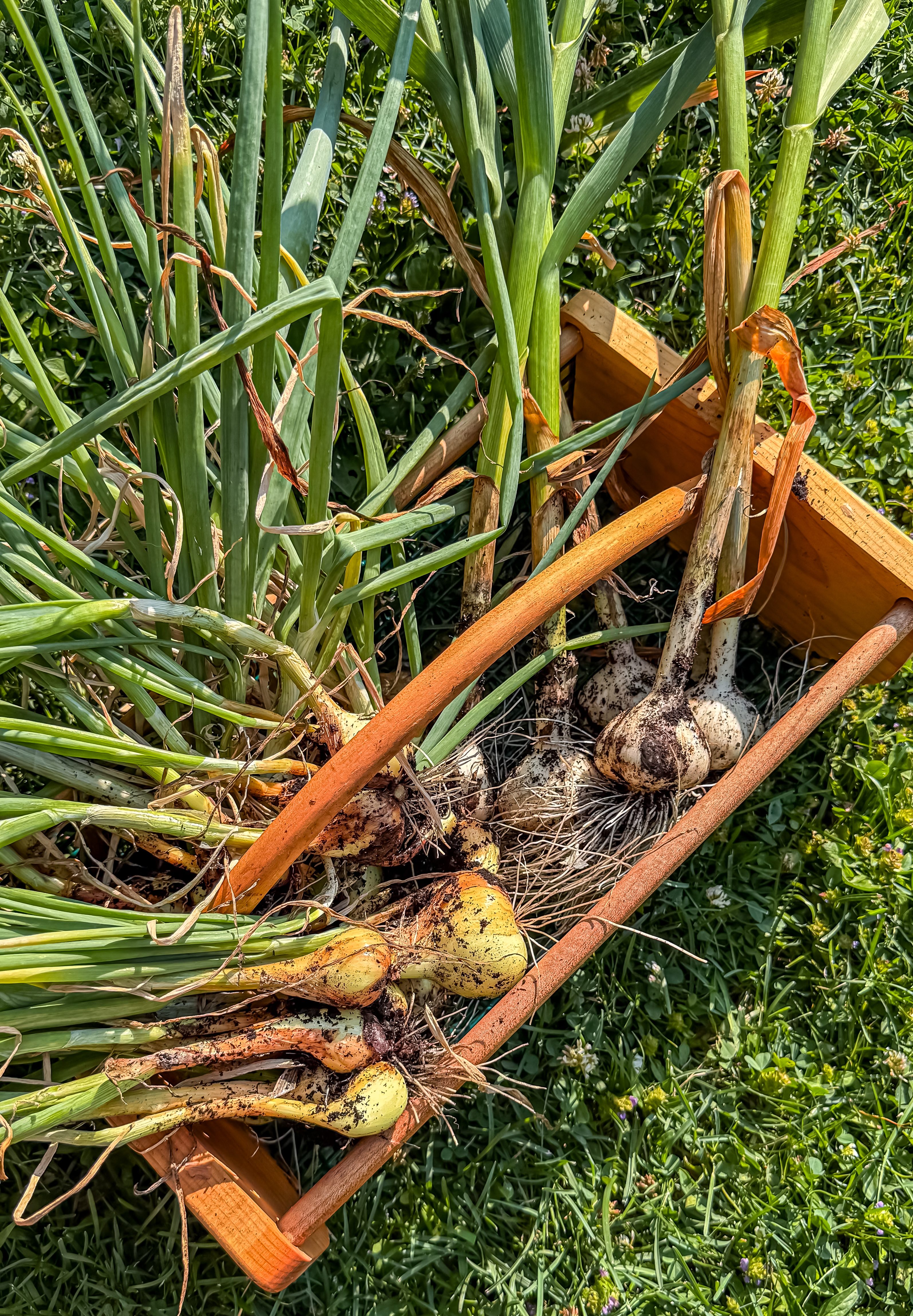
When we planted garlic for the first time last October, we weren’t entirely sure what to expect. We had done our research, picked varieties that would handle our New England winters, and hoped for the best. Now, nearly a year later, we’re harvesting close to 100 heads of garlic, still picking garlic scapes, and already planning what we’ll do differently next season.
If you’re thinking about growing garlic in Zone 6a or another cold climate, here’s what our first season looked like from planting to harvest.
Choosing the Right Garlic for a New England Winter
We live in coastal New Hampshire in USDA Zone 6a, where winters are long and snowy. It’s not unusual for us to have several feet of snow on the ground throughout the season, so choosing the right garlic variety was one of our biggest decisions.
After researching what performs well in colder climates, we decided on two hardneck varieties from Sow True Seed:
- German White Hardneck Garlic
- Persian Star Hardneck Garlic
Planting Garlic Last October
Since this was our first year growing garlic, we wanted to give it the best chance possible. We planted everything in two raised beds rather than directly in the ground.
One thing we didn’t realize is that garlic isn’t particularly appealing to most garden pests or wildlife. Because of that, I think next year we’ll reserve one raised bed for garlic and plant the rest in our in-ground garden. We actually tucked a handful of cloves into the ground as an experiment this year, and so far they’re following almost the exact same growing schedule.
Waiting Through Winter
After planting, there wasn’t much to do besides wait.
The garlic spent the winter tucked beneath several months of snow while we impatiently dreamed about spring.
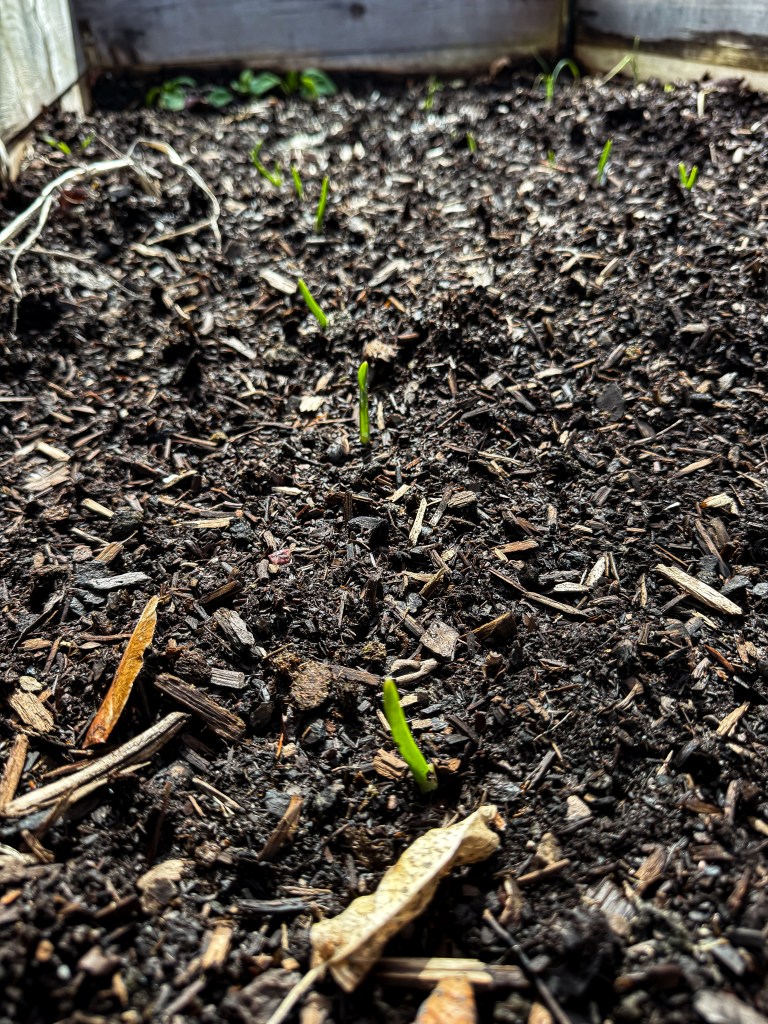
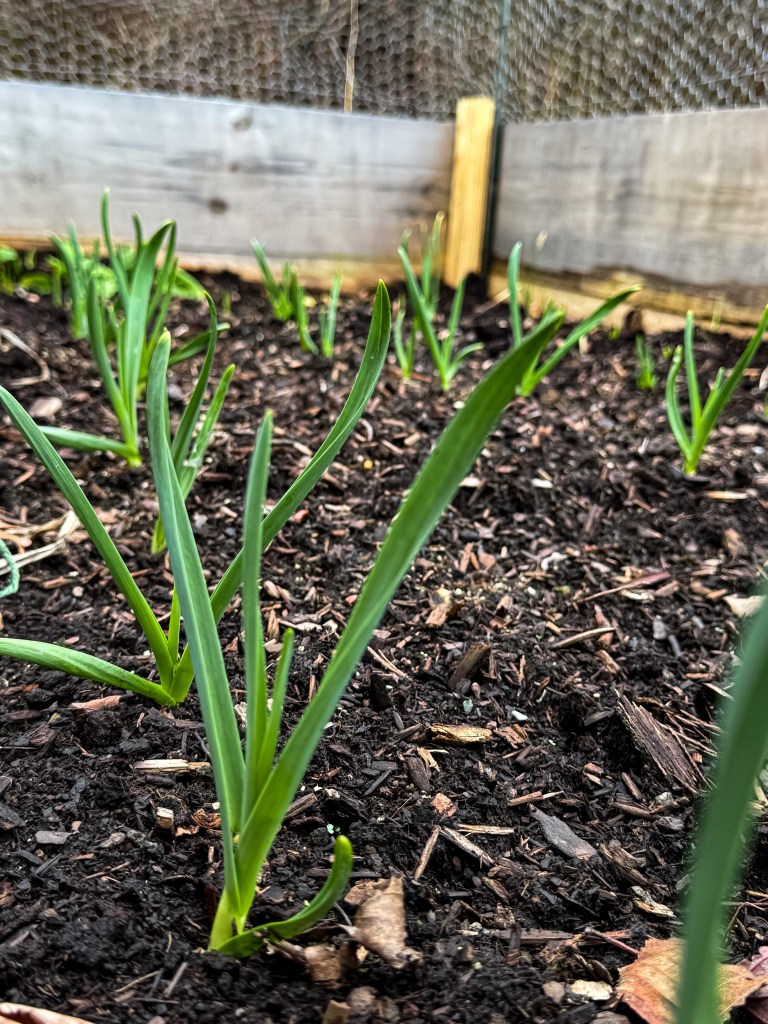
As the snow finally began to melt, little green shoots started poking through the soil in early April. It was one of the first signs that our garden was waking back up.
Garlic Is Stronger Than We Expected
This year’s weather certainly kept things interesting…
After months under snow, a few late-season storms, and an early heat wave, the garlic kept moving along without much help from us. For a first-year crop, that was reassuring. It reminded us that garlic is a good fit for a New England garden because it does not need perfect conditions to perform well. Once it was planted, most of the work was simply giving it time.
Harvesting Our First Garlic Scapes
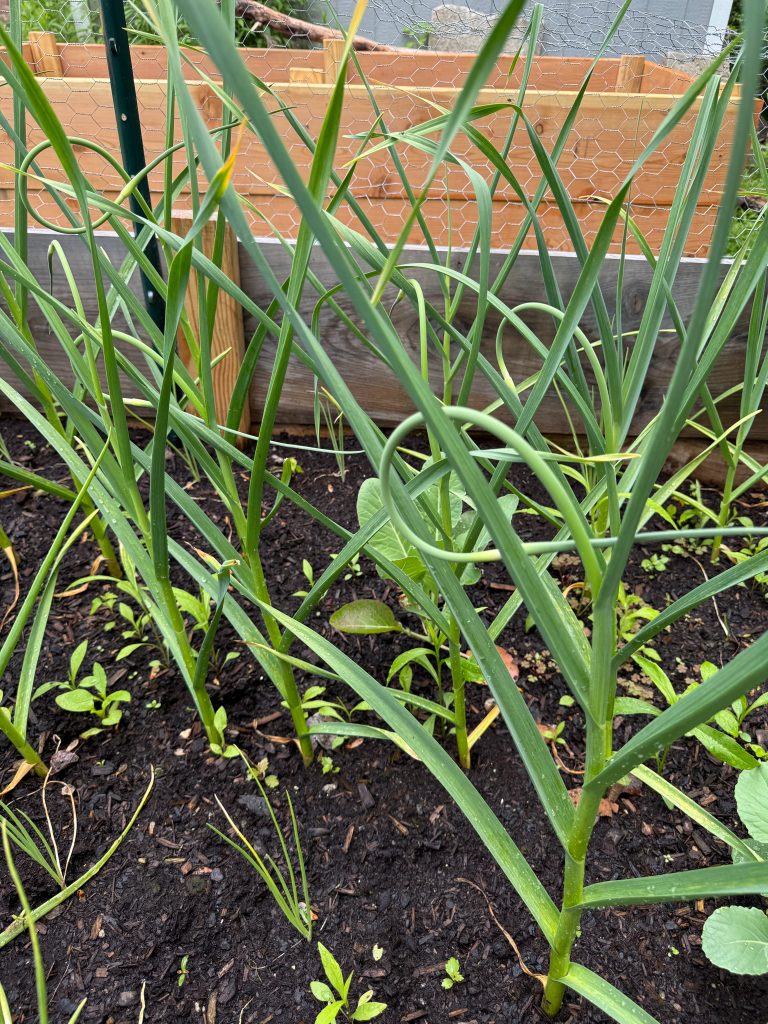
By early June, our first garlic scapes were ready to harvest. If you’ve never grown hardneck garlic before, scapes are the curly flower stalks that appear before the bulbs are fully ready. Harvesting them helps send the plant’s energy back into the bulb, but it also gives you an ingredient to cook with while you’re still waiting on the garlic itself.
We’ve been using them in everything from roasted dinners to pasta dishes, and they have that fresh garlic flavor without being quite as strong as a mature clove.
This was also the point in the season when we started to notice a difference between our two raised beds. The sunnier bed sent up scapes first, while the bed with a little more shade stayed a couple of weeks behind. At first, I thought that meant the shadier bed was underperforming, but it ended up making the harvest feel a lot more manageable.
One Lesson We’ll Definitely Carry Into Next Year
This year we’re growing around 100 heads of garlic… that’s a lot of garlic to harvest all at once for a small household.
Because one bed received more sun than the other, our harvest naturally became staggered. We picked scapes from one bed while the other continued growing. Now, in early July, we’re harvesting mature garlic from our sunnier bed while we’re still picking a handful of garlic scapes from the shadier one.
Instead of feeling behind, that second bed has actually spread the work out over several weeks.
Next year we’ll intentionally plan for that.
Harvesting Fresh Garlic
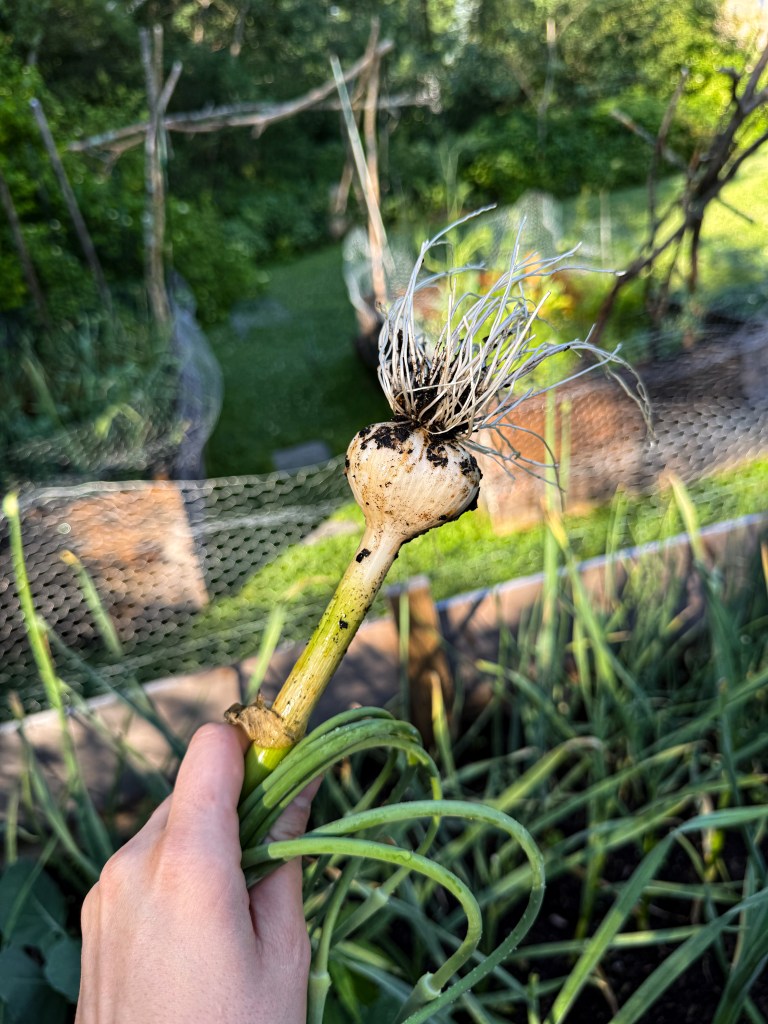
It’s now early July, and we’re finally pulling our first bulbs from the garden.
One thing I didn’t expect is just how different fresh garlic tastes compared to the cured garlic we buy at the grocery store.
Freshly harvested garlic is milder, sweeter, and incredibly tender. We’ve been letting a few bulbs dry on our covered porch for a couple of days before bringing them into the kitchen, and we’ve found ourselves using an entire head in a single meal without it overpowering the dish.
It’s become one of my favorite ingredients of the summer.
We’ll begin curing the rest of our harvest soon so it stores well through the coming months, but for now we’re enjoying it as fresh as possible.
Already Looking Ahead to Next Season
One of the funniest things about growing garlic is that you’re already thinking about next year before you’ve even finished harvesting this year’s crop.
We recently placed another order with Sow True Seed and decided to try two new varieties:
- German Red Hardneck Garlic
- Rosewood Hardneck Garlic
We’ll plant them again this October, but with a slightly different plan.
Instead of dedicating two raised beds to garlic, we’ll likely use one raised bed, plant more cloves directly in our garden, and intentionally keep some garlic in an area that gets a little more shade so we can continue staggering our harvests.
Why Garlic Has Become One of My Favorite Crops
I think what I’ve enjoyed most about growing garlic is that it never feels like you’re waiting all year for a single harvest. First, you get to harvest the garlic scapes. A few weeks later, the bulbs are ready to pull, and before long they’ll be cured and stored for months of cooking. For a first year growing garlic, it’s been one of the most rewarding crops we’ve planted, and I already can’t wait to do it again this fall.
If You’re Thinking About Growing Garlic…
Now is actually the perfect time to start planning.
Many seed companies open garlic pre-orders during the summer, even though planting doesn’t happen until fall. If garlic has been on your gardening list, it’s worth ordering early so you have the best selection of varieties available.
We’re already looking forward to getting ours back in the ground this October.
And next up?
Learning how to properly cure and store nearly 100 heads of garlic. We’ll be sharing that process soon! For now, we’ll be following this guide from UNH.


 Fiddlehead Homestead
Leave a comment