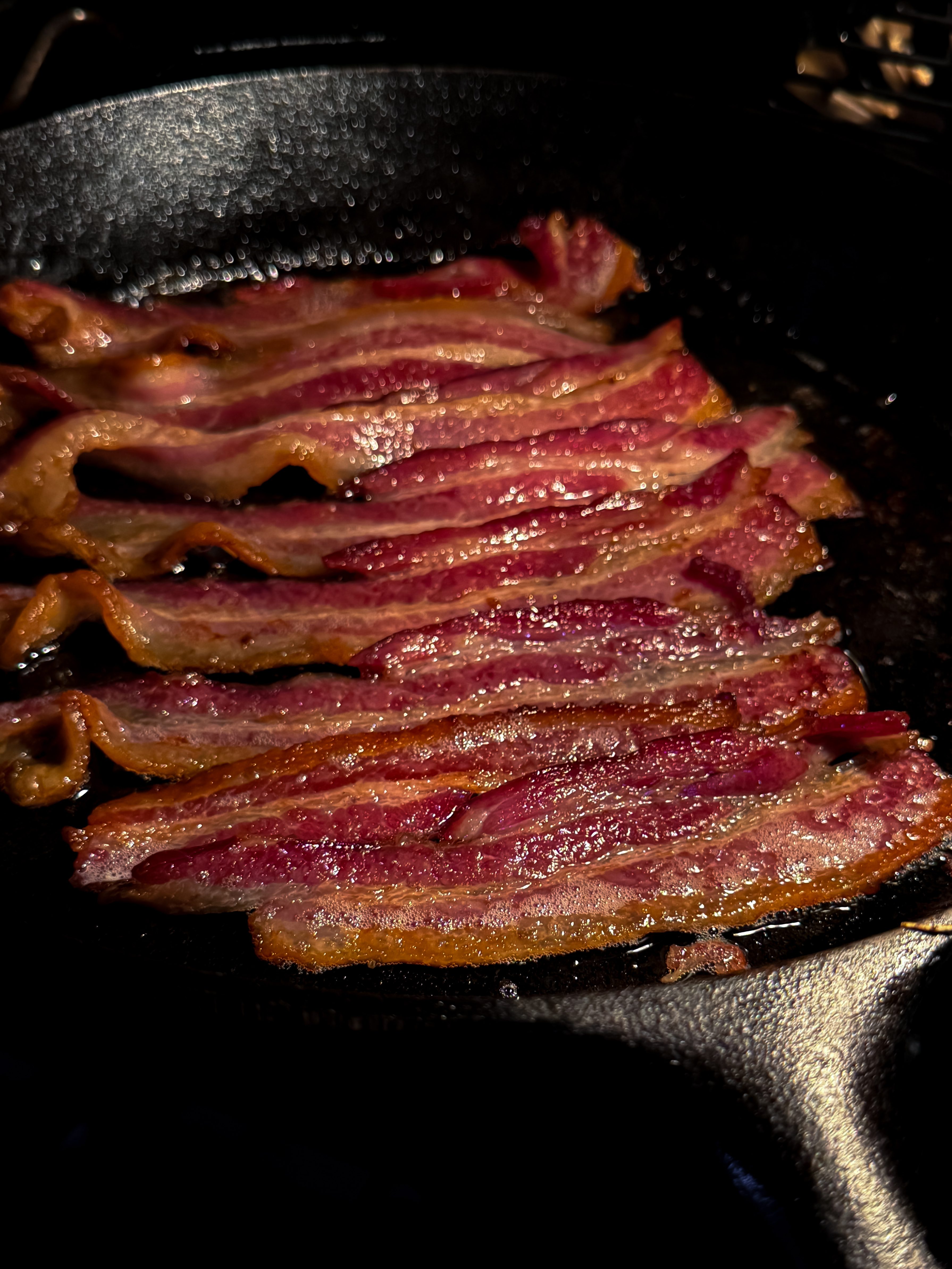
Cooking bacon isn’t complicated, but there’s a method for every situation. Whether you’re frying it in a skillet for breakfast, baking it in the oven for a big family meal, or sizzling it over a fire while camping, each technique brings its own advantages. Follow these steps for the perfect bacon.
This guide covers all three approaches with simple, effective steps so you can make perfectly cooked bacon no matter where you are.
Skillet Bacon: The Classic Method
Cooking bacon in a skillet is the most traditional approach. It’s simple and delivers crisp, flavorful results when done right.
What You’ll Need
- Bacon strips (as many as will fit in your skillet)
- A cast iron or stainless steel skillet
Instructions
- Start with a Cold Skillet
Lay the bacon strips flat in the skillet before turning on the heat. Starting cold helps the fat render evenly. - Cook Over Medium Heat
Turn the burner to medium heat and let the bacon cook slowly. Flip the strips occasionally with tongs to ensure even cooking. - Remove and Drain
Once the bacon reaches your desired crispness, remove it and place it on a plate lined with paper towels to absorb excess grease. - Save the Drippings (Optional)
Carefully pour the rendered bacon fat into a jar for cooking other dishes – it’s perfect for frying eggs or adding flavor to roasted vegetables.
Oven Bacon: Hands-Off and Perfectly Even
Cooking bacon in the oven is ideal when you’re feeding a crowd or want a less messy method. It ensures even crisping without needing to flip or babysit.
What You’ll Need
- Bacon strips
- A baking sheet
- Aluminum foil or parchment paper
- An oven-safe wire rack (optional, for extra crispiness)
Instructions
- Preheat the Oven
Heat your oven to 400°F (200°C). - Prepare the Baking Sheet
Line the baking sheet with foil or parchment paper for easier cleanup. Place a wire rack on top if you want the grease to drip away as the bacon cooks. - Lay Out the Bacon
Arrange the bacon strips in a single layer, ensuring they don’t overlap. - Bake
Cook for 15-20 minutes, depending on how crispy you like your bacon. Check it around the 15-minute mark to avoid overcooking. - Drain and Serve
Transfer the bacon to a plate lined with paper towels to absorb excess grease before serving.
Campfire Bacon: A Rustic Treat
Cooking bacon over an open flame is as satisfying as it gets. It’s perfect for camping trips and adds a smoky flavor that can’t be replicated in the kitchen.
What You’ll Need
- Bacon strips
- A cast iron skillet or a grill grate
- Long-handled tongs
- A steady campfire with a bed of coals
Instructions
- Set Up Your Cooking Area
Place a cast iron skillet on the grate over your campfire, or set a grate directly above the hot coals. Let the skillet heat up for a few minutes. - Cook the Bacon Slowly
Lay the bacon strips in the skillet or directly on the skillet/grate. Use long-handled tongs to flip the bacon regularly, ensuring it cooks evenly without burning. Adjust the skillet’s position or height above the coals if it’s cooking too fast. - Drain Excess Grease (Optional)
If using a skillet, carefully tilt it to pour off excess grease (or save it for other campfire recipes). - Enjoy
Once the bacon is crispy, remove it from the heat and let it cool slightly before serving.
Tips for Bacon Cooking Success
- Choose the Right Bacon: Thick-cut bacon is less likely to burn and cooks evenly in all methods.
- Don’t Overcrowd: Whether in a skillet, oven, or over a fire, leave space between strips for proper crisping.
- Save the Grease: Don’t toss that leftover bacon grease! Check out our guide on how to save and use bacon fat for practical and flavorful ways to make the most of it in your kitchen.



 Fiddlehead Homestead
Leave a comment